Showing posts with label Open Access. Show all posts

Saturday, April 21, 2012

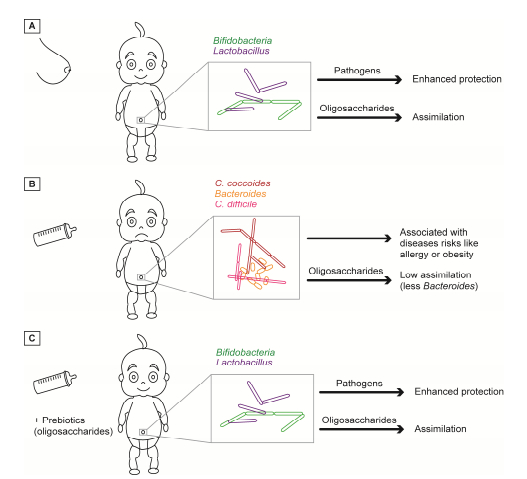
Best #openaccess figures: happy baby, sad baby

From J. Integrated Omics. DOI: 10.5584/jiomics.v2012i2012.76

One of the greatest things about open access papers in my mind is the ability to use the figures for blogs, classes, etc, without having to consult lawyers and other paper pushers. So I am starting a new series here where I highlight some fun/good figures from various open access papers.

The one shown above is from "How has the recent high-throughput sequencing revolution improved our knowledge of infant microbial colonization and health. J. Integrated Omics. DOI: 10.5584/jiomics.v2012i2012.76. By Adrien Fischer, Katrine Whiteson, Vladimir Lazarevic, Jonathan Hibbs, Patrice Francois, Jacques Schrenzel

Friday, March 30, 2012

Nature Precedings - a preprint server for biology akin to arXiv - shutting down as of April 3

Just got this email regarding Nature Precedings.
Dear registrant:

As you are an active user of Nature Precedings, we want to let you know about some upcoming changes to this service. As of April 3rd 2012, we will cease to accept submissions to Nature Precedings.  Submitted documents will be processed as usual and hosted provided they are uploaded by midnight on April 3rd.  Nature Precedings will then be archived, and the archive will be maintained by NPG, while all hosted content will remain freely accessible to all.

Be assured that Nature and the Nature research journals continue to permit the posting of preprints and there is no change to this policy, which is detailed here.

Nature Precedings was launched in 2007 as NPG’s preprint server, primarily for the Life Science community.  Since that date, we have learned a great deal from you about what types of content are valued as preprints, and which segments of the research community most embrace this form of publication.  While a great experiment, technological advances and the needs of the research community have evolved since 2007 to the extent that the Nature Precedings site is unsustainable as it was originally conceived.

Looking forward, NPG remains committed to exploring ways to help researchers, funders, and institutions manage data and best practices in data management, and we plan to introduce new services in this area.  We have truly valued your contributions as authors and users to Nature Precedings and hope that you will actively participate in this research and development with us.
Interestingly, there is no announcement at the Nature Precedings site itself.  I assume the email I received is real (it really looks real) though you never know these days.  It's too bad.  I like the concept of a preprint server for biology.  Interestingly, one of the alternatives to NP is FigShare (which is pretty cool) which recently became part of the Digital Science group which is a sister group to Nature.  Hmm ... wonder what the conversations at joint tea parties between Nature and Digital Science group are like.  Could be fun.

Thursday, March 29, 2012

Why is the paper behind "The Pill Led to Increased Women's Wages" story free to .GOV but not others?

There is an interesting story going around the web.  An example of the coverage is here at the Huffington Post: Birth-Control Pill Helped Boost Women's Wages, New Study Shows.  As for all stories I read about new scientific findings, for this one I looked for the research paper or report behind the story.  The Huff. Post story seemed a bit strange in this regard reporting "Bailey and her colleagues report in a National Bureau of Economic Research working paper due to be published in July in the American Economic Journal: Applied Economics."  Weird - to be published in July.  Why report on it now?  So I sniffed around at other news stories about this topic and found one that said the working paper was published online.  So a little more sniffing (i.e., Googling) led me to the National Bureau of Economic Research (a private non profit entity).  And there, eventually, I found

The Opt-In Revolution? Contraception and the Gender Gap in Wages 

Martha J. Bailey, Brad Hershbein, Amalia R. Miller
NBER Working Paper No. 17922
Issued in March 2012


When I tried to get the paper I discovered it was $5.  Not so bad.  I prefer of course, free and open publication.  Especially if the research and salaries of the authors were paid for by Government grants.  But I did not have the zeal to dig into the funding behind the work.  And 5$ really is not much money.  So I decided WTF - let's buy it. Alas, then I discovered that I could not just buy the paper but that I had to create a user account of some kind, and I stopped at that point.  Too complicated for a bit of a whim.  So much for buying the paper.

Then I saw further down on the page

Information about Free Papers 
You should expect a free download if you are a subscriber, a corporate associate of the NBER, a journalist, an employee of the U.S. federal government with a ".GOV" domain name, or a resident of nearly any developing country or transition economy.

Most of this makes sense to me except the .GOV part.  Why exactly do they make articles available for free to those who work for the US Federal Government but not for others, like, say, the taxpayers who pay for the US Federal Government?  Again, I get that publishers have to make a living somehow and I was even ready to pay for this article because the fee was low and it seemed interesting.  But I am a bit perplexed and annoyed that people that have a .GOV domain address get stuff for free.  This smells funny to me.  You can't even give pencils to some people working for the US Federal Government due to gift rules.  But apparently you can give away research papers that are not available to others.  What is the logic behind this?  Aargh.  Well.  Maybe I will download the paper when I within a .GOV domain.  But it will feel icky in some way.

Wednesday, March 28, 2012

Corrections Scamming at Nature: Tantalizing clues, to see errors just pay more money #Seriously?

So - after finding out that "corrections" for freely available papers at Nature cost money to get access to I decided to snoop around at Nature Publishing Group's archives to see how they have handled corrections.

If you search for "Corrections" in Nature Publishing Group's journals, you see that many / most are labelled as "free" and in fact, they do seem to be free.  That is until about 5 years ago.  As far as I can tell, most "Corrections" published prior to September 2007 are not freely available.

For example see this correction where we are told
"In the News & Views article “Chemical biology: Ions illuminated” by Christopher J. Chang (Nature 448, 654–655; 2007) an error crept into part a of the accompanying figure."
Tantalizing.  To find out more you need just pay $18.

Or in this correction:
"In the News & Views article “Organic chemistry:A tuxedo for iodine atoms” by Phil S. Baran and Thomas J.".  
Not so tantalizing.  But nevertheless the full correction can be yours for just $18.

Or this one:
The story ”That's no laser, it's a particle accelerator” (Nature 443, 256; 2006) incorrectly stated that the device described could accelerate electrons to 0.15% of their initial speed.
This is one of my favorites:
"A misleading statement appeared in the News and Views article “Cardiology: Solace for the broken-hearted?” by Christine L."
Want to know what was misleading?  $18.

How about this one:
In Karim Nader's News and Views article “Neuroscience: Re-recording human memories” (Nature 425, 571–572; 2003) the citation of reference 6 was unclear. The reference concerned — Siegel, J.

How about this one
"On page 875 of this Article, there are some typographical errors in the equations used in the computer model. The errors are in the third and fourth full paragraphs on this page." 
Some don't even have any clues.  For example in this one we just know the problem is in an article on Transatlantic robot-assisted telesurgery.  Or in this one the issue is with ancient homes for hard-up hermit crabs.

I could go on and on and on.

The corrections one needs to pay to see go back to the 1800s.  For example in 1893 J. J. Walker wrote:
"The next two paragraphs will require slight modifications accordingly; and the last will, of course, be unnecessary. I owe this correction to a correspondence with which Prof. W.".  Alas, we can't know the rest without - wait for it - without paying $32. 
I think we should have a context.  Find the correction for which the free part is the most absurd or tantalizing.  I don't know if other closed access journals do the same thing but it would be great to know ...

UPDATE: Some more fun stuff from Nature.  There is a paper from Nature in 2005 "Making sure corrections don't vanish online".  It is, of course, available for just $18.

Tuesday, March 27, 2012

Nature's access absurdity: Human Genome Paper free but access to corrections will costs $64

Ahh - the saga continues.  Though I peripherally noted this in a previous post this deserves a post of it's own.  Nature Publishing Group has a policy of making genome sequencing papers freely available.  Alas, not all such papers have in fact been made freely available (see Hey Nature Publishing Group - When are you going to live up to your promises about "free" genome papers?  and A Solution to Nature Publishing Group's Inability to Keep Free Papers Free: Deposit them in Pubmed Central for more on this).

But I have discovered a just painful though funny absurdity with NPG's money making machine.  They have in fact made the Lander et al. Human genome paper from 2001 freely available.  But there is an Erratum to this paper.  And if you want to get it (and without getting it there is no way to know what is being corrected), you have to pay $32: Access : erratum: Initial sequencing and analysis of the human genome : Nature.  Oh, and in addition a Correction "We have identified several items requiring correction or clarification in our paper on the sequencing of the human genome" for this paper also costs $32.  So the incorrect version of the paper is free but the corrections will cost you $64.

I wonder, for papers for which people pay $$, if there are corrections do they get them for free?

A Solution to Nature Publishing Group's Inability to Keep Free Papers Free: Deposit them in Pubmed Central

Well, tick tock tick tock.  I am still awaiting some explanation for Nature Publishing Group once again charging for access to genome papers that they promised would be available for free.  See my last post for more details: The Tree of Life: Hey Nature Publishing Group - When are you going to live up to your promises about "free" genome papers? #opengate #aaaaaarrgh

In the meantime I have come up with a solution even if NPG folks cannot figure one out.  It is very simple.  How about Nature Publishing just deposit's all genome papers in Pubmed Central and thus even when the money making machine of Nature switches some setting and makes the papers not freely available at the Nature web site(s) for some time, the papers will  still be officially free in Pubmed Central.  I think this is probably the only solution I would trust given that this is at least the third time this has happened.

Monday, March 26, 2012

Hey Nature Publishing Group - When are you going to live up to your promises about "free" genome papers? #opengate #aaaaaarrgh

This is just ridiculous.  Nature Publishing Group in 2007 announced that they were making all papers in their journals that reported genome sequences would be made freely available and would be given a Creative Commons license: Shared genomes : Article : Nature.

About a year ago I posted to twitter (using the hashtag #opengate) and my blog about how Nature Publishing Group was not following through on their promises.  See for example
and more including some from others
Amazingly, and pleasantly, I note, in my complaining I exacted some responses from people from Nature Publishing Group who swore that these were just oversights and they would fix them.  Well, alas, the money collecting machine of Nature Publishing Group is back.


For example, currently the following papers are not freely available even though at one point they were or they clearly fit in the "Shared genomes" definition Nature Publishing Group so happily promotes:
These above are all papers of mine, so I noticed them first (I noticed this when trying to create a Pintarest Baord for all my papers and not being able to get to a free page for these papers meant I couldn't add them to the Board.  Could it be that Nature Publishing Group is just trying to get my goat?  Let's see.  A brief search found these papers by others - all also not freely available even though all clearly fit Nature's own definition of genome sequencing papers:

Here are some others
I think the funniest (and scariest) part may be the corrections and errata that are not freely available. And these are just the articles I found in a 15 minute search. I am sure there are more.  Yes, Nature Publishing Group has made many genome papers freely available.  That is great.  Much better than many other publishers.  But the cracks in your system are large and suggest that nobody there is actually dedicated to seeing through on the promises.  Promises are meaningless.  Follow through is the key.  Come on Nature Publishing Group - how about assigning a "Free access ombudsman" or something like that who will make sure that free means free.  I am sick of writing these posts.  You should do your own QC ...

UPDATE: see some more recent blog posts of mine about this topic:


UPDATE 3-28-12 1 PM PST:
Well, if you look at the comments, Nature is apparently trying to fix this and most of the articles I listed above are now freely available (the corrections are still not free but they claim to be working on it).  But a simple search of Nature finds there are still some papers that are closed off that shouldn't be:
It's not that hard to find these.  It baffles me a bit how people at Nature don't seem to be able to find them.  But maybe I am just really good at searching ...

Thursday, March 22, 2012

Calling all computational biologists - do as C. Titus Brown does - submit your pubs to arXiv

Can I just express my love/respect for C. Titus Brown?  Not only is he into openness in science and metagenomics and such.  But he practices what he preaches.  For example see - Daily Life in an Ivory Basement : /mar-12/diginorm-paper-posted in which he describes his new submission to arXiv and some background.  I know I am big on Open Access and all, but even we have been lame about submitting things to preprint servers like arXiv.  Gonne do my best to fix that and try and copy Titus.

Wednesday, March 14, 2012

California Breast Cancer Research Fund Tax Checkoff; wondering about Open Access policies

Just got this email below about what seems to be a worth cause:
March 8, 2012 
Dear UC Colleagues, Throughout California and UC, researchers are developing new approaches to prevent, treat and cure cancer. I am writing you to share important information with those of you who will soon file your California state tax return. At the end of California Tax form 540, there is a section in which you can donate to two highly regarded cancer research programs that are administered by the UC Office of the President.


If you go to line 405, you can contribute to the California Breast Cancer Research Fund and if you go to line 413, you can contribute to the California Cancer Research Fund.

No contribution is too small, and 95 percent of contributions to these two programs via this tax check-off go directly to cancer research or community-based education.

Donations from line 405 go to our California Breast Cancer Research Program, which is renowned not only for its cutting-edge research, but also for working with community advocates and health care providers in targeting the issues and needs of patients and families, especially the underserved.

In recent years, donations from line 405 have supported critical research including: identifying environmental factors that potentially cause breast cancer; developing targeted therapies to block breast cancer from spreading to other organs; and improving support networks to empower patients as they maneuver the health care system. See this website for more information: http://cabreastcancer.org/taxcheckoff/

Donations to line 413 go to the California Cancer Research Fund, which is helping to provide prevention and awareness programs in communities disproportionately affected by cancer. One major ongoing project is increasing the understanding of the impact of tobacco use and cancer on vulnerable populations. This research could lead to reduced smoking, increased cancer awareness and strengthened prevention programs.

I wanted to be sure you were aware of this means of investing in research that can serve all Californians and our communities.

Sincerely,

Lawrence Pitts, M.D. Provost and Executive Vice President University of California, Office of the President

However, I wonder about the open access requirements of the fund. I sniffer around at their web site http://cbcrp.org/about/ and could not find anything about guaranteeing access to the results of the work supported by this fund. That is too bad - this seems to be a great case where openness could be both a good thing and a useful marketing tool (to get people to chip in money from their taxes).

Tuesday, March 13, 2012

Not sure what to make of this new "Datasets.Com" effort from Hindawi

Just got this email and I thought I would share.  Not sure what to make of this effort.  I do support the sharing of data sets but I am think we probably do not need a whole new cadre of data journals to handle this data.

But there is a spread of what some have called "Predatory" open access publishers (see http://metadata.posterous.com/83235355 for example).  Hindawi, who is behind this, seems to have a mix of good and predatory tendencies and this seems like it may fit into the more predatory categorization.  And I just thought it would be good to bring this a bit more into the open to discuss it.

Dear Dr. Eisen,

My name is Safa Tahoon and I am a Journal Developer for the Hindawi Publishing Corporation. We are in the process of launching a new peer-reviewed, open access journal titled Dataset Papers in Genetics, which will publish Dataset Papers in all areas of genetics research, and I am writing to invite you to join the Editorial Board of this new journal.


Dataset Papers in Genetics is part of a new journal platform that Hindawi is developing called Datasets International (http://www.datasets.com). The main objective of Datasets International is to help researchers in all academic disciplines archive, document, and distribute the datasets produced in their research to the entire academic community. In addition to publishing a series of journals devoted to the dissemination of Dataset Papers, Datasets International hosts the underlying data behind these Dataset Papers and makes it accessible to all researchers worldwide.

The journal will be run using a collaborative editorial model which is designed to provide a fast peer review process for all submitted manuscripts. The journal will be edited by a distributed Editorial Board, and it aims for an average review time of 4 weeks from submission until a final decision has been reached.

Manuscripts that are submitted to the journal will be sent to a number of Editorial Board Members (typically each manuscript will be sent to at least 5 Editors), who will have two weeks to provide either a recommendation for the publication of the manuscript, along with a written commentary detailing any improvements that the authors should make to their manuscript, or a written critique of why the manuscript should not be published.

After the two-week period has elapsed, if the majority of the editorial evaluations recommend the manuscript be rejected, the manuscript will be rejected. If all the editorial evaluations that are received recommend that the manuscript be accepted for publication, the manuscript will be accepted. Otherwise, the editorial evaluations will be anonymously communicated to all of the Editors who participated in the peer review process. Each Editor will be given an additional week to review the feedback of the other Editors and to either confirm or revise their earlier editorial recommendations. If the majority of the editorial evaluations that are received by the end of this second round of review recommend the manuscript be accepted for publication, the manuscript will be accepted. Otherwise, the manuscript will be rejected. If the manuscript is accepted for publication, the names of the Editors who recommended the publication of the manuscript will be published alongside the ma!
nuscript. More information on the journal is available on the following web pages:

http://www.datasets.com/ (Datasets International Home Page)
http://www.datasets.com/journals/genetics/ (Journal Home Page)
http://www.datasets.com/journals/genetics/workflow/ (Editorial Workflow)
http://www.datasets.com/journals/genetics/editors/ (Editorial Board)

The journal will be published using an open access model, which allows disseminating scholarly articles by removing the access barriers imposed by the subscription model, in order to make the full-text of all published articles freely available for any interested reader. In this model the publication costs of an article are covered in the form of Article Processing Charges, which are publication fees paid from the research budget of accepted authors. In this model authors retain the copyright of their work, and we make every possible effort to ensure that the full-text of every published article is both visible and accessible to all potential readers.

Manuscripts that are submitted by the members of the Editorial Board of Dataset Papers in Genetics to the journal will automatically receive a 50% reduction in their Article Processing Charges.

Please do visit the web pages above and let me know if you have any questions or comments. We hope you will accept to join the Editorial Board of the journal and I will be looking forward to hearing from you soon.

Best regards,

Safa Tahoon

------------------------------
Safa Tahoon
Journal Developer
Hindawi Publishing Corporation
http://www.hindawi.com/
------------------------------

Tuesday, February 28, 2012

Nice #openaccess review on the ecology of chemosynthetic symbioses from @chicaScientific & Guus Roeselers

Figure 1 from 10.1007/s00253-011-3819-9. Sediment cross section 
exposing the characteristic Y-shaped burrow dug by S. velum. 
Positioning itself at the triple junction of the Y, the bivalve alternates
 between actively pumping oxygenated water from the upper arms of
 the burrow through the mantle cavity and across the gills and 
accessing reduced sulfur compounds diffusing up from the anoxic 
zones below and pumped through a ventral incurrent opening in the 
mantle. Scale bar equals 2.5 cm

For those who do not know, I got my first taste of microbiology research when I was an undergrad at Harvard and I did my senior/honors research project in the lab of Colleen Cavanaugh. Colleen studied (and in fact still studies) symbioses between invertebrates and chemosynthetic bacteria. The bacteria basically allow these invertebrates to function like plants in many ways. Some of these invertebrates (like the giant tube worms in hydrothermal vents) have lost their mouths and digestive systems and basically live by bringing in high energy chemicals for their symbionts which then make sugars, vitamins, amino acids and other goodies for the host.


Anyway - I am still very interested in these symbioses and have published a few papers on the topic here and there. All that lead in is to simply point everyone out there to a nice new Open Access review paper by Guus Roeselers and Irene Newton: On the evolutionary ecology of symbioses between chemosynthetic bacteria and bivalves. When I first saw the reference in the "Applied Microbiology and Biotechnology" journal I was worried I would not have access to it, but I clicked on the link and discovered it was published using Springer's version of Open Access. Yippee.  The article is worth a look.
ResearchBlogging.org Roeselers, G., & Newton, I. (2012). On the evolutionary ecology of symbioses between chemosynthetic bacteria and bivalves Applied Microbiology and Biotechnology, 94 (1), 1-10 DOI: 10.1007/s00253-011-3819-9

Monday, February 27, 2012

In case you didn't hear - #openness WON - Research Works Act shelved

See this story from infojustice.org: Research Works Act Shelved by Sponsors

This is just awesome news. The act was completely inane.

Hooray for Open Access and Open Science and Openness in general.

Thursday, February 16, 2012

Calling on AAAS to Deposit all Archives of Science in Pubmed Central

Much has been written recently about a call to boycott Elsevier due to their outrageous policies regarding academic publishing.  I support the boycott but I also agree with many others who have said it perhaps unnecessarily singles out one publisher over others who also have publishing policies that could, well, use a bit of work.  And one such publisher is AAAS - the American Association for the Advancement of Science.

Today, the annual meeting of AAAS begins today in Vancouver.  I was supposed to be there by now, but thanks to some technical problems at Alaska Airlines, I am back in Davis for the day.  AAAS has some policies regarding openness that I believe are unnecessary and not in the general interest of scientific progress.  One is the strange "talk embargoes" I have written about recently.  Another, which is much more problematic, is the fact that Science Magazine (published by AAAS) does not deposit archival content in Pubmed Central.  Now, mind you, I think all scientific publishing funded by taxpayer money should be openly and freely available immediately. But that is not going to happen immediately.

One helpful tool in making scientific literature freely available is Pubmed Central.  Most scientific societies I know of deposit published material in Pubmed Central after some initial delay of 3-6-12 months.  But for reasons that are not entirely clear (to me at least, or to a Google search), AAAS clings to their archival material making it only available through their own web site.  Sure - they do allow authors to deposit their version of their manuscripts in Pubmed Central after a delay.  But most alas do not do this.  And I note - this option is only open to NIH and Wellcome Trust funded work.  So much material cannot be deposited anyway.

AAAS's policy seems unnecessarily closed accessy and limits the impact and spread of the knowledge contained within papers in Science.  I note - this policy is yet another reason to not publish in Science and to instead choose either fully open access journals or ones that at least release their stranglehold on the papers after a short delay.

Today I call on AAAS to make archival literature from Science Magazine available in Pubmed Central.  And I call on others out there, such as those at the AAAS meeting, to pressure AAAS to do this.  Write blog posts.  Call and email AAAS members and leadership.  Email AAAS.  And so on.

Ideally everyone would just publish in fully open access journals and the journals would deposit material in archives.  But until that happens, we need to make every effort to increase the amount of literature getting into Pubmed Central and other archives.  So - pressure AAAS.  And while everyone is at it, please deposit whatever you can in preprint servers, in various repositories and in Pubmed Central.  Every little bit helps.

Monday, February 13, 2012

Trolls and flames discuss #NotSoFunny satire at the Scholarly Kitchen

Bit of a tiff going on over at the Scholarly Kitchen over a "satire" someone named Ken Anderson wrote related to the Research Works Act. The piece was about the "Restaurant Works Act" -- Someone pointed me to the post and I found the satire to be, well, unfunny so I chose to ignore it. My brother alas could not ignore it, nor could some others and there is some discussion going on there now.

I will skip commenting on the discussion itself - go read it. But a few things there annoyed me. One of these is that Anderson has resorted to criticizing the punctuation of some of his critics there. That is pretty lame.  See start of thread below

Alex Merz wrote 
The inappropriateness of the analogy was clear by the end of paragraph 2. For the rest: TL;DR
To which Anderson responded
For those of us not as hip as Alex, TL DR means “too long, didn’t read.” I won’t comment on the inappropriateness of the semicolon in his Urban Dictionaryesque construction. The post is about 850 words, by the way
To which Alex re-responded
It is sad when an overly serious someone attempts a grammar or usage flame, and fails. 
“Too long; didn’t read” is both proper usage and a more effective construction than “too long, didn’t read.” 
Bryan Garner: “Fourth, the semicolon sometimes appears simply to give a weightier pause than a comma would. This use is discretionary. A comma would do, but the writer wants a stronger stop—e.g.: “There is never anything sexy about Lautrec’s art; but there also is never anything deliberately, sarcastically anti-feminist in it.” Aldous Huxley, “Doodles in the Dictionary” (1956), in Aldous Huxley: Selected Essays 198, 206 (1961).” 
Don’t be sad, though. Like you, a lot of smart people don’t know their way around a semicolon. 
If you’re too timid to wade into Fowler, Strunk & White, or Garner, there is help:
http://theoatmeal.com/comics/semicolon
 
To which Anderson responded
Nice try, but you don’t have any reason to use a semicolon there. In any event, I think you’re just covering up a typo with sophistry, so let’s move on.
To which Merz responded
You attempt a punctuation flame. When your own-goal is pointed out (with reference to authoritative sources) you mumble that your flame was correct (though it wasn’t), and you indicate that we should drop the discussion of punctuation that *you initiated.* 
Do you have *any* idea that makes you look? 
I’m guessing that you don’t: http://en.wikipedia.org/wiki/Dunning–Kruger_effect
and so on ...

And before the folks at Scholarly Kitchen accuse me of having no sense of humor about such things - I suggest they look at my history of making fun of EVERYONE in publishing all the time.  The key to me is to be funny first and if you have some political comments you want to make, make them in that context.  I found the cooking / food RWA story to just not be funny so I did not pay any attention to its other messages.  Though clearly those messages bothered some folks, like my brother.

Sunday, February 12, 2012

Storification of Fake Science Publishing @fakeelsevier @fakeplos @realelsevier @fakeeisen @closedaccessj

So - I have been enjoying all the Fake Scientific Publishing Posts on Twitter from @fakeelsevier @fakeplos @realelsevier @fakeeisen @closedaccessj and others.  Now I understand why some people think I am behind some of these (e.g., here are some of my Fake Science News posts).  But alas though I WISH I was behind some of these accounts, I am not.  Anyway - I created a storification of the beginning of some of these postings if you want to see some of the origins of the fakery.


Tuesday, February 7, 2012

New openaccess paper from my lab on "Zorro" software for automated masking of sequence alignments


A new Open Access paper from my lab was just published in PLoS One: Accounting For Alignment Uncertainty in Phylogenomics. Wu M, Chatterji S, Eisen JA (2012) Accounting For Alignment Uncertainty in Phylogenomics. PLoS ONE 7(1): e30288. doi:10.1371/journal.pone.0030288

The paper describes the software "Zorro" which is used for automated "masking" of sequence alignments.  Basically, if you have a multiple sequence alignment you would like to use to infer a phylogenetic tree, in some cases it is desirable to block out regions of the alignment that are not reliable.  This blocking is called "masking."

Masking is thought by many to be important because sequence alignments are in essence a hypothesis about the common ancestry of specific residues in different genes/proteins/regions of the genome.  This "positional homology" is not always easy to assign and for regions where positional homology is ambiguous it may be better to ignore such regions when inferring phylogenetic trees from alignments.

Historically, masking has been done by hand/eye looking for columns in a multiple sequence alignment that seem to have issues and then either eliminating those columns or giving them a lower weight and using a weighting scheme in the phylogenetic analysis.

What Zorro does is it removes much of the subjectivity of this process and generates automated masking patterns for sequence alignments.  It does this by assigning confidence scores to each column in a multiple seqeunce alignment. These scores can then be used to account for alignment accuracy in phylogenetic inference pipelines.

The software is available at Sourceforge: ZORRO – probabilistic masking for phylogenetics.  It was written primarily by Martin Wu (who is now a Professor at the University of Virginia) and Sourav Chatterji with a little help here and there from Aaron Darling I think.  The development of Zorro was part of my "iSEEM" project that was supported by the Gordon and Betty Moore Foundation.

In the interest of sharing, since the paper is fully open access, I am posting it here below the fold. UPDATE 2/9 - decided to remove this since it got in the way of getting to the comments ...

Friday, February 3, 2012

Interesting new metagenomics paper w/ one big big big caveat - critical software not available "

Very very strange.  There is an interesting new metagenomics paper that has come out in Science this week.  It is titled "Untangling Genomes from Metagenomes: Revealing an Uncultured Class of Marine Euryarchaeota" and it is from the Armbrust lab at U. Washington.

One of the main points of this paper is that the lab has developed software that apparently can help assemble the complete genomes of organisms that are present in low abundance in a metagenomic sample.  At some point I will comment on the science in the paper, (which seems very interesting) though as the paper in non Open Access I feel uncomfortable doing so since many of the readers of this blog will not be able to read it.

But something else relating to this paper is worth noting and it is disturbing to me.  In a Nature News story on the paper by Virginia Gewin there is some detail about the computational method used in the paper:
"He developed a computational method to break the stitched metagenome into chunks that could be separated into different types of organisms. He was then able to assemble the complete genome of Euryarchaeota, even though it was rare within the sample. He plans to release the software over the next six months."
What?  It is imperative that software that is so critical to a publication be released in association with the paper.  It is really unacceptable for the authors to say "we developed a novel computational method" and then to say "we will make it available in six months".  I am hoping the authors change their mind on this but I find it disturbing that Science would allow publication of a paper highlighting a new method and then not have the method be available.  If the methods and results in a paper are not usable how can one test/reproduce the work?

Wednesday, February 1, 2012

Q & A about Elsevier, my blog retraction, and #OpenAccess

Jop de Vrieze has written an article related to the Elsevier boycott for ScienceInsider:

Thousands of Scientists Vow to Boycott Elsevier to Protest Journal Prices

In the article, one of the things he discusses is my blog post (which I then "retracted) suggesting people ignore any papers published in Elsevier Journals: Boycotting Elsevier is not enough - time to make them invisible (UPDATED/RETRACTED).

In his article he wrote:
One scientist who strongly supports the boycott is Jonathan Eisen, a microbial genomicist at the University of California, Davis, and the Academic Editor-in-Chief of PLoS Biology, an open access journal. On Tuesday, Eisen urged readers of his blog to go one step further, by no longer paying attention to research published by Elsevier. "In essence, ignore them - consider them dead - make them invisible," he wrote. But after readers protested that no paper should be ignored just because of where it's published, Eisen quickly retracted the entire post, which he said had been written "at midnight, with a cat on my lap." "The response to my post helped make me realize that the semi-sarcastic attempted tone was not coming through correctly," Eisen writes in an e-mail to ScienceInsider.

de Vrieze did a good job of representing my point of view.  But I thought it might be useful to all of the Q&A in the email with him.  Fortunately, he said this was OK to do so ... here are my full answers to his questions:


If you would have adjusted your blog, what would have been the main points your would have reconsidered?

Oh - my blog post was really just a thought question written in anger in the middle of the night. I could have written it better but in the end, the idea behind the post was wrong-headed. Any scientific publication or presentation, no matter where it is made, should be considered a contribution to science. The name of the journal or the
publisher does not matter (nor from my point of view does it matter if something is in a journal per se). Thus even though I was being a bit tongue in cheek in the post suggesting we ignore publications in Elsevier journals - clearly my tone was not coming through and I decided to retract the post.

I note - following the recommendation of Ivan Oransky who runs the Retraction Watch site I left up the original post (though I changed it
to strikethrough font) and posted an explanation for the retraction.
I also tried to chase down twitter and blog and Google+ discussions of my post to say I was "retracting" the post and to explain why and what I had been trying to say.

I also note - I had sense knocked into my head on this by people on twitter like @drugmonkey -so the response to my post helped make me realize that the semi-sarcastic attempted tone was not coming through correctly

For your article you might want to check out the discussions happening on Google+ and on Drug Monkey's blog.

https://plus.google.com/u/0/103101121348859087349/posts/B8f1XyuY7Gk

https://plus.google.com/u/0/106772544387169323774/posts/TszquaTKeoA


What do you think is the value of this petition?

I support the petition. I think scientist's and others (humanities too ...) need to take a stand against some of the publishing policies and political actions (e.g., support of the RWA) of Elsevier. I note - I already do not review for or publish in or edit for any of their journals. And I think if 1000s of scientists really followed through on this Elsevier might be forced to change their policies.

What do you think needs to change in the system?

I should note - I am personally not against for profit companies and not agains the notion that people can make a profit off of publishing.

The problem I have is really two fold.

  1. I think that research and publications that are supported by taxpayer money should be made available broadly to the public. 
  2. I think there is abundant evidence that more openness in science is beneficial to the progress of science - open data (e.g., Genbank) has revolutionized certain fields. True open access publishing frees up the literature so that not only can anyone access it but also allows anyone to remix and utilize the literature in creative ways (and potentially make a profit from doing so). Open release of software is critical for cases where software is used in scientific publications. And so on. Openness aids in the progress of science.

Thus with #1 and #2 above, I think it is imperative that we move towards more openness. The challenge is - how do we get there? And how do we pay for it? (Note - I am not saying above that being open has no cost - I am saying it is beneficial and politically wise). The problem with Elsevier in my mind is they take government subsidies that pay for journal charges, salaries of their reviewers and editors, and subscription fees for libraries - and in return - amazingly - they generally take ownership of the literature. This seems to be an unsound trade.

So - the question is - can we become more open and afford it? Yes, I think it is pretty clear that there is more than enough money being spent currently on publishing broadly that could be reallocated to open publishing. The success of PLoS and Biomed Central and the move of some societies to release publications rapidly (e.g., ASM) indicates that this is possible (though I note - Science still lags in this area).

I think we are still figuring out exactly how to set up a new system - but the old system of signing over the ownership and / or publishing rights for papers is no longer needed and it is not helpful to scientific progress.

Who should take the first, or most important steps? Scientists? Publishers? Libraries? Institutions?

Everyone. We all need to work together to come up with a system that retains the good things in the old system (e.g., scientific societies, good peer review, paper editing, etc) while being more open. We need to change hiring policies, library subscription systems, peer review, journal search algorithms, and so on.

What, if publishers like Elsevier would disappear, would give scientists a mark of quality or relevance of scientific publications?

Well - the name of a publisher and the name of a journal is a crude mark of quality at best. What should be measured is the ACTUAL quality of publications not a surrogate for quality. Certainly, everyone is busy and surrogates of quality end up being used a lot. But we need to develop systems that measure article quality better and also help people find the right articles for them. There are many examples of things in the works to help do this. The PLoS commenting system was/is an attempt at this. So is Faculty of 1000. I think post-publication peer review is going to be critical. The cream should rise to the top and the more we can do to make sure this happens quickly the better.
Monday, January 30, 2012

Boycotting Elsevier is not enough - time to make them invisible (UPDATED/RETRACTED)

Update: The original post here was written at midnight, with a cat on my lap.  I thought this post conveyed some tongue in cheek aspect of this idea to ignore work in Elsevier journals. (one could view it as a midnight middle finger to Elsevier over some of their policies).  But clearly, based on the responses I am seeing that did not come across.  I accept the error of my ways.  Drug Monkey is right - no work should be ignored - no matter where it is published.   I could explain in more detail what I was trying to convey - but in the end that is like explaining a bad joke.  Instead, I am therefore retracting my blog post.  That is one for Ivan Oransky I guess. Now back to your regularly scheduled programs.

There has been much written in the last few days about multiple calls to boycott journals published by Elsevier due to Elsevier's generally problematic publishing policies and support of SOPA/ RWA, etc.  People have called for people to not only boycott publishing in Elsevier journals but to also stop reviewing for them, editing for them, and also to try to get libraries to stop subscribing to them.  Some good reading in this area includes:
I think these are good steps.  But I also think they are not enough.  I am therefore calling for people to go one step further - to stop helping promote articles published in Elsevier journals.  Don't blog about papers in Elsevier journals.  Don't tweet about them.  Don't use Elsevier papers for journal clubs.  In essence, ignore them - consider them dead - make them invisible.  Not completely of course.  Any work should be considered a contribution to science or math or whatever your field is.  But there are LOTS and LOTS of things to do with your time.  And if you like to share - to communicate - to discuss - it is easy to find non Elsevier articles articles for those purposes (even better - pick open access articles ..)

This may be a minor thing in the fight for more openness in publishing, but it should help.  After all, for many scientists, the worst thing that can happen is to be ignored.

Tuesday, January 10, 2012

AAAS meeting - is this one for embargo watch?

Giving a talk at the AAAS meeting in February in Vancouver.  I have avoided AAAS meetings previously because I do not like AAAS's position on open access issues.  Given that AAAS is at least indirectly a supporter of the recent Research Works Act I am pondering whether or not I will boycott the meeting.   While I ponder that -- I thought I would share the presenter instructions I just got from AAAS (see below).

Apparently, my talk is "embargoed" - though I am not sure I understand how that works for a talk (see the part I highlighted in yellow which, well, I almost certainly will not be following).  I do not understand actually what a talk embargo means - am I supposed to not share with people what I am working on so that every piece of data I present at the meeting will never have ben seen by anyone?  Or am I just not supposed to show my talk to anyone?  What exactly is a talk embargo?  And what will they do when I do not follow it?  Maybe Ivan Oransky knows.


I note - I am surprised AAAS does not try to require me to sign over rights to my presentation to them ...
This request for materials is from the AAAS media relations team and is separate from any you may receive from your symposium organizer or the AAAS Annual Meeting office.

----------------------------------------

Dear AAAS Annual Meeting Participant:

If you have already uploaded your materials to the Virtual Newsroom for the 2012 AAAS Annual Meeting in Vancouver, thank you and please disregard the rest of this e-mail.

For those speakers who have not submitted materials, we'd appreciate your prompt attention to this request. We expect a good turnout of reporters at the meeting in February, and we'd like to provide them as much information as possible about your presentation.

Symposium organizers can help as well by uploading relevant papers or overview documents and encouraging your speakers to submit materials. Papers and speaker materials are for use by reporters in preparing stories and are not made available to general registrants at the meeting.

Speakers and organizers can submit materials by going to:
http://www.eurekalert.org/aaasnewsroom/mcm/speakers

Your individual username and password for the site:

Username: xxxx
Password: xxxx

Please provide the following:

-- A one-paragraph biographical sketch (not a C.V.)

-- A short lay-language summary of your talk, beyond the abstract.

-- The text of your talk, if available, or a related (ideally recent) technical paper, either as a Word file or a PDF. PowerPoint presentations are acceptable, but a full text will better serve reporters' needs.

-- Any additional supporting materials, including multimedia files such as JPEG or TIFF photos in high resolution (300 dpi) and/or digitized video clips.

IMPORTANT: Please note that all AAAS meeting presentations are strictly embargoed and your speaker materials should not be released publicly until the time of your presentation.

If you upload your materials by 16 January, we will copy them at our expense for placement in the on-site library of speaker materials, available only to newsroom registrants.

Please notify your institution's press office of your AAAS Annual Meeting presentation as soon as possible. Your press office can help you submit speaker materials to us and can begin to generate media interest.

If you have any questions, please feel free to contact us.